The Right Strategy to Execute Any Plan
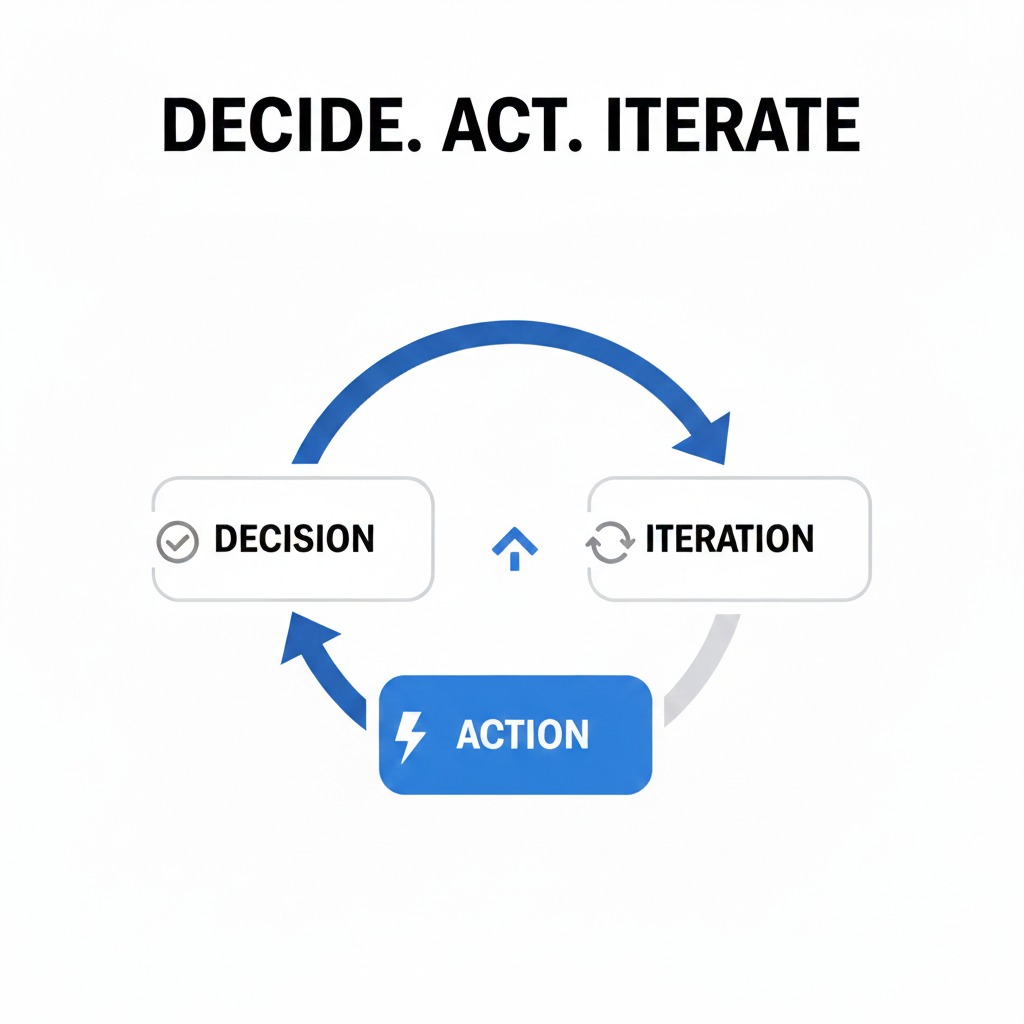
A Simple Decision → Action → Iteration Framework
Most plans don’t fail because they’re bad ideas. They fail because execution never truly begins—or it starts and stops without consistency. People spend weeks overthinking strategy, waiting for the “perfect” plan, only to lose momentum before real progress is made. The truth is, execution doesn’t require complexity. It requires clarity and movement.
The most effective way to execute any plan can be reduced to a simple three-step framework: Decision → Action → Iteration.
The first step is decision. Every plan stalls when decisions are delayed. Clarity beats perfection. A clear decision creates direction, while hesitation creates confusion. Instead of asking, “What is the best possible move?” ask, “What is the next logical move with the information I have right now?” Strong execution begins the moment a decision is made and owned.
The second step is action. Ideas have no value without movement. Action doesn’t mean doing everything at once—it means doing the next small, meaningful step. Many people wait to feel confident before acting, but confidence is a result of action, not a prerequisite. Momentum builds when plans move from paper to practice, even in imperfect form.
Action also creates feedback. Once something is in motion, reality responds. You see what works, what doesn’t, and where resistance appears. This leads to the third and most important step: iteration.
Iteration is where real progress happens. Instead of treating a plan as fixed, successful executors treat it as flexible. They observe results, adjust their approach, and move again. This cycle removes the fear of getting it wrong because nothing is final—everything is improvable. Iteration turns failure into data and mistakes into direction.
The power of this framework lies in its simplicity. Decision creates focus. Action creates momentum. Iteration creates growth. Repeat the cycle consistently, and progress becomes inevitable.
This approach works for business strategies, personal goals, marketing plans, and even life decisions. You don’t need more information—you need more execution loops.
The right strategy isn’t about having the perfect plan. It’s about building a system that keeps you moving forward. When you commit to deciding faster, acting sooner, and iterating consistently, execution stops being overwhelming and starts becoming reliable.
In the end, progress belongs to those who move, learn, and move again.